

Mobile Web Accessibility Checker
Test your website the way a phone sees it. Catch mobile-only problems — sideways scrolling, tiny tap targets, orientation locks — mapped to WCAG 2.2.
Scan Depth
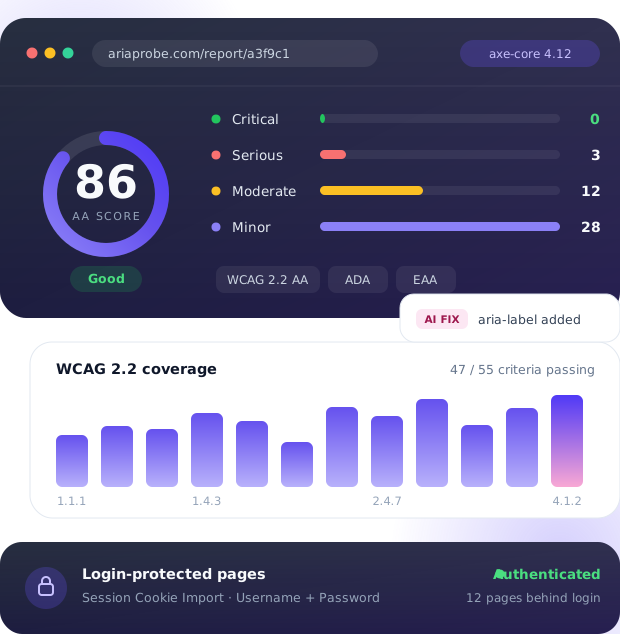
Powered by axe-core, the same rule engine behind Deque, axe DevTools and Siteimprove.Scan a single page in seconds or crawl your whole site — and get a score your team and your clients actually understand.
Ready to audit your website
Enter a URL above and choose scan depth to begin
What is mobile web accessibility?
More than half of all web traffic now comes from phones. A page that works on a desktop can still fail on a small screen: text can spill off the side, buttons can be too small to tap, and menus can trap people who zoom in. Mobile web accessibility means your site is usable on a phone by everyone — including people who use screen readers, larger text, or who rely on touch. This checker loads your site at a real mobile size and flags the issues that only appear there.
What this checker tests on mobile
- Reflow / sideways scrolling (WCAG 1.4.10) — Finds content that is wider than the screen and forces users to scroll left and right to read it.
- Tap target size (WCAG 2.5.8) — Flags buttons, links and controls that render smaller than 24×24 pixels, which are hard to tap accurately on a touch screen.
- Orientation lock (WCAG 1.3.4) — Detects pages that force portrait or landscape and don't work when the phone is rotated.
- Colour & contrast — Checks text and non-text contrast as they actually render on the mobile layout.
- Forms & labels — Inputs without labels, missing autocomplete hints, and unclear error messages on mobile forms.
- Structure, links & ARIA — Heading order, landmark regions, unclear link text, and misused ARIA — checked in the mobile view.
Why mobile accessibility matters
Most users reach your site on a phone, and accessibility rules such as the ADA, Section 508, the European Accessibility Act and WCAG 2.2 apply to the mobile experience just as much as the desktop one. Fixing mobile issues early avoids complaints, legal risk, and lost customers — and it simply makes your site nicer to use for everyone.
